

Resources
From equipment manufacturing to project delivery, we ensure reliable and stable operation throughout the entire project lifecycle.
Download Center

Technical Insights
-
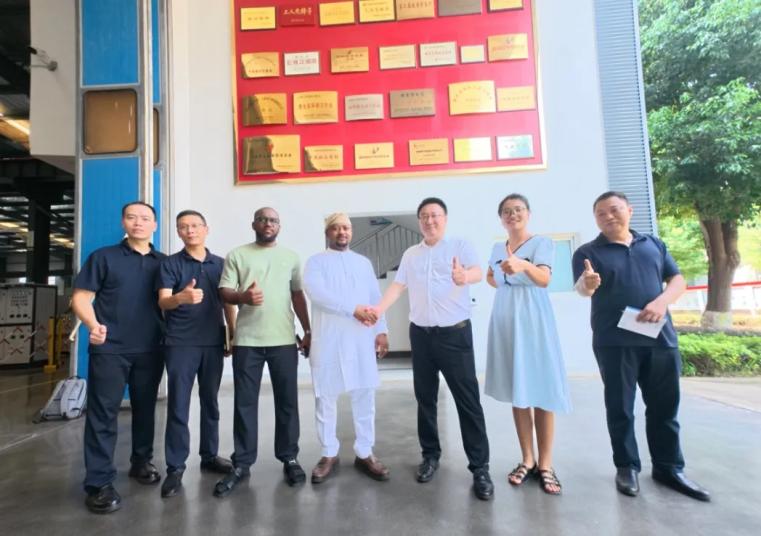
Nigerian Client Delegation Visits Dayu Electric to Explore New Cooperation Opportunities in Africa’s Power Market
Recently, a Nigerian client delegation visited Dayu Electric Technology Co., Ltd. Both sides conducted in-depth discussions on Nigeria’s power market demand, electrical equipment application, product and technical adaptation, and recent market cooperation, achieving positive outcomes.
2026-08-28
-
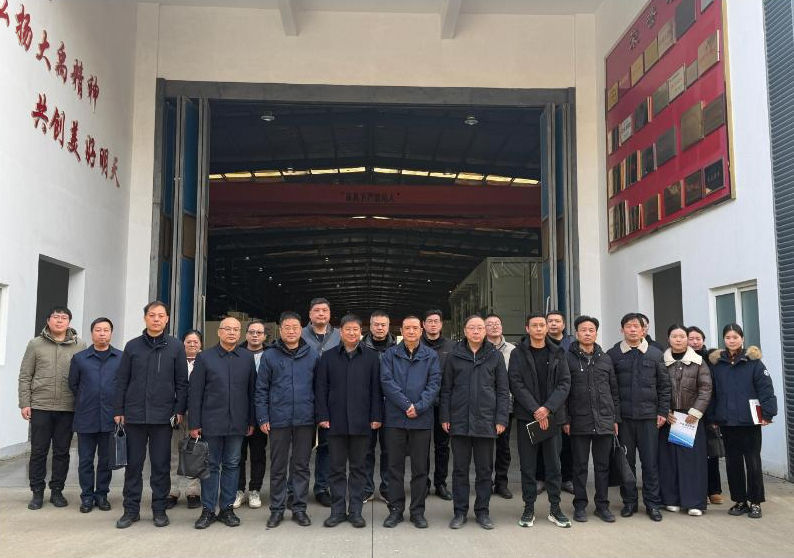
Doctor Team of Hubei Vocational College Visits Dayu Electric to Discuss School-enterprise Cooperation
On the morning of January 24, Guo Sha, president of Hubei Vocational and Technical College, and Hu Changjie, vice president, led a doctoral team to visit Dayu Electric. The two sides carried out in-depth cooperation and negotiations on core issues such as collaborative technical research, joint training of talents, and transformation of scientific research achievements. Company chairman Wang Yihua, supervisor Xiao Shaobing, chief engineer Li Chongbo and other warm reception.
2026-01-27
-
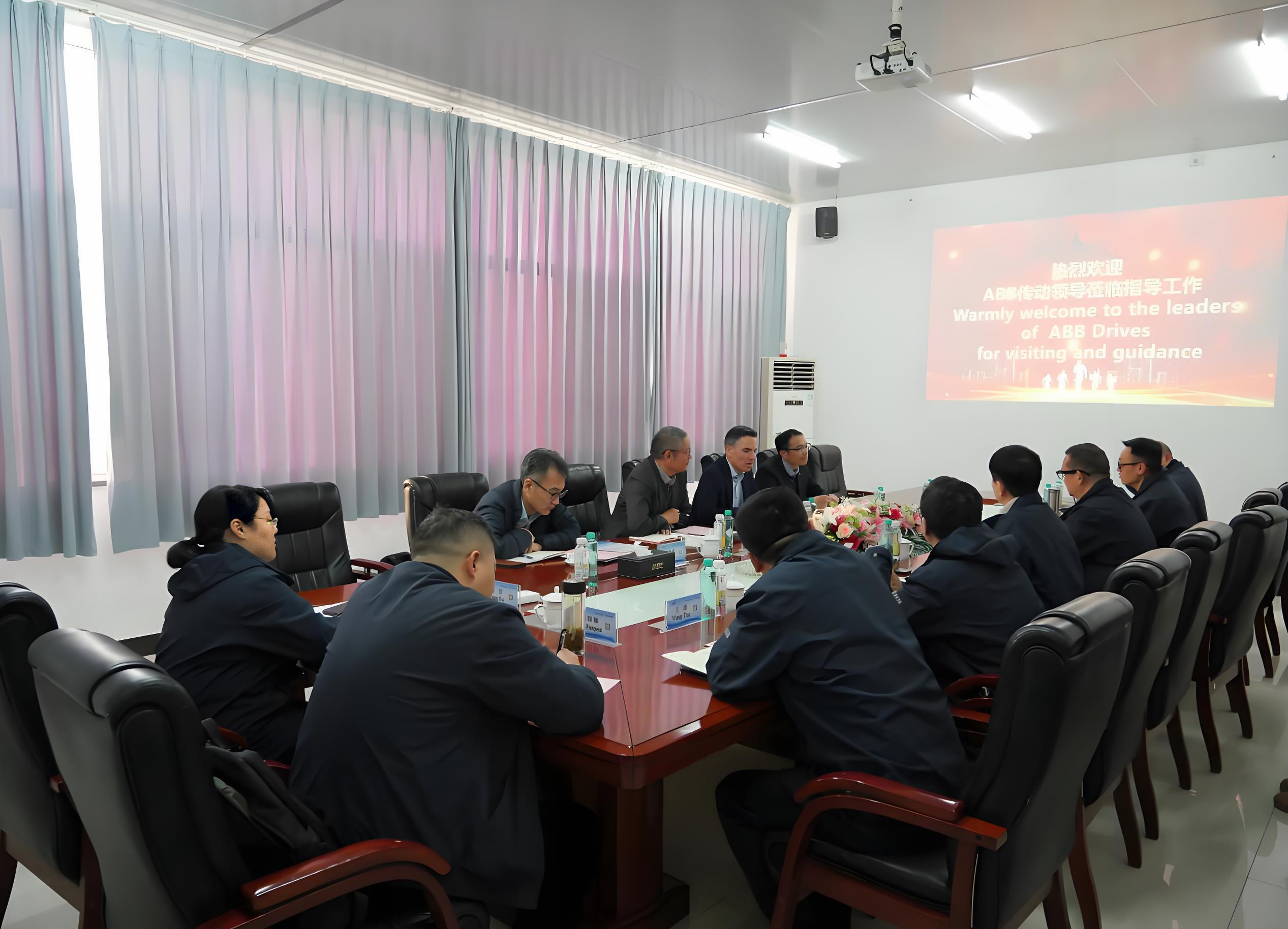
ABB Global Medium Voltage Transmission Business Senior Visits Dayu Electric to discuss new opportunities for cooperation
On December 16, 2025, Adrian Rothenbuehler, head of ABB's global business line for medium voltage transmission, led a senior management team to visit Dayu Electric to carry out business exchanges. The company's chairman Wang Yihua, general manager Wang Qin and other senior leaders warmly welcomed the visit of ABB and his party. The two sides held business talks on LCI project cooperation and future coordinated development, and jointly discussed the technological innovation and market expansion p
2025-12-22
News & Events

-
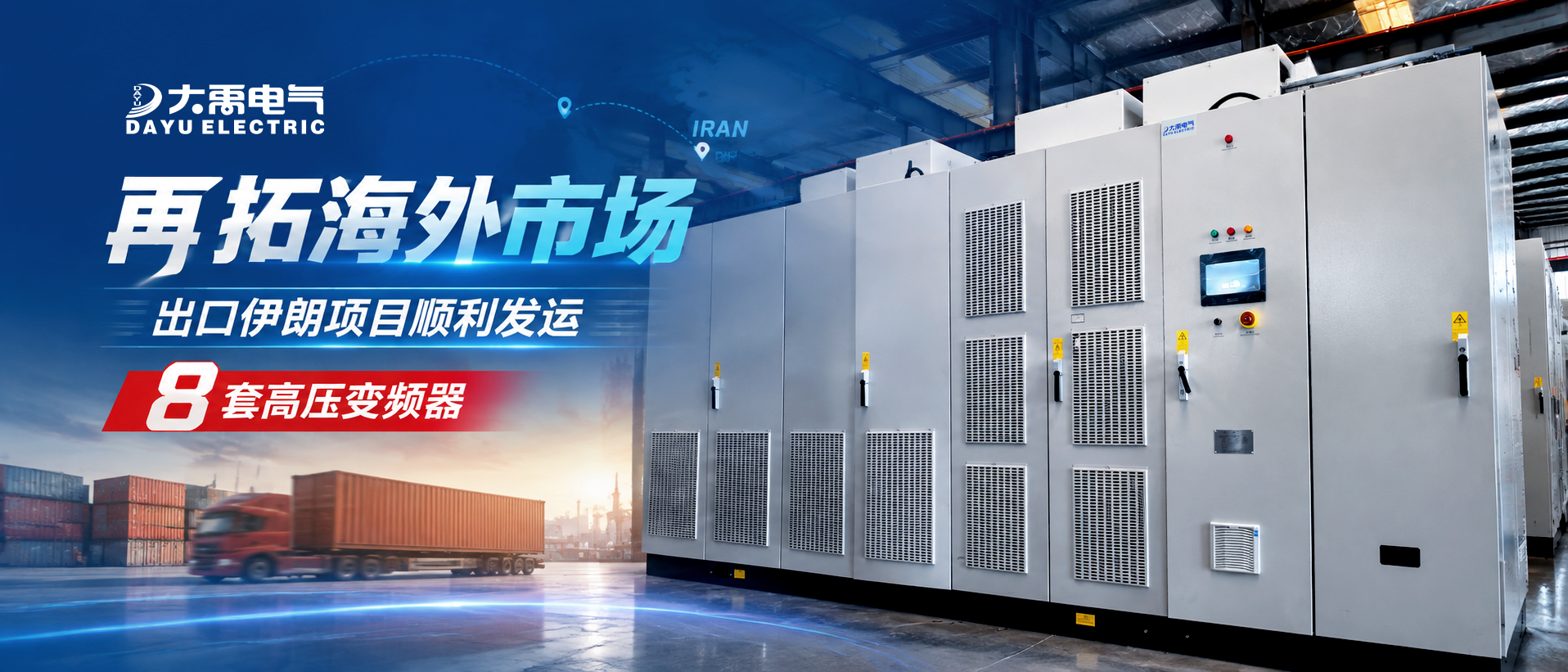
Expanding Overseas Market Further | Dayu Electric Successfully Ships Equipment for Iran Export Project
Recently, Dayu Electric has finished manufacturing, quality inspection and delivery preparation of equipment for its Iran export project. A total of 8 sets of GBT-MV series high-voltage inverters have been loaded and shipped, setting off for the overseas project site.
2026-10-11
-
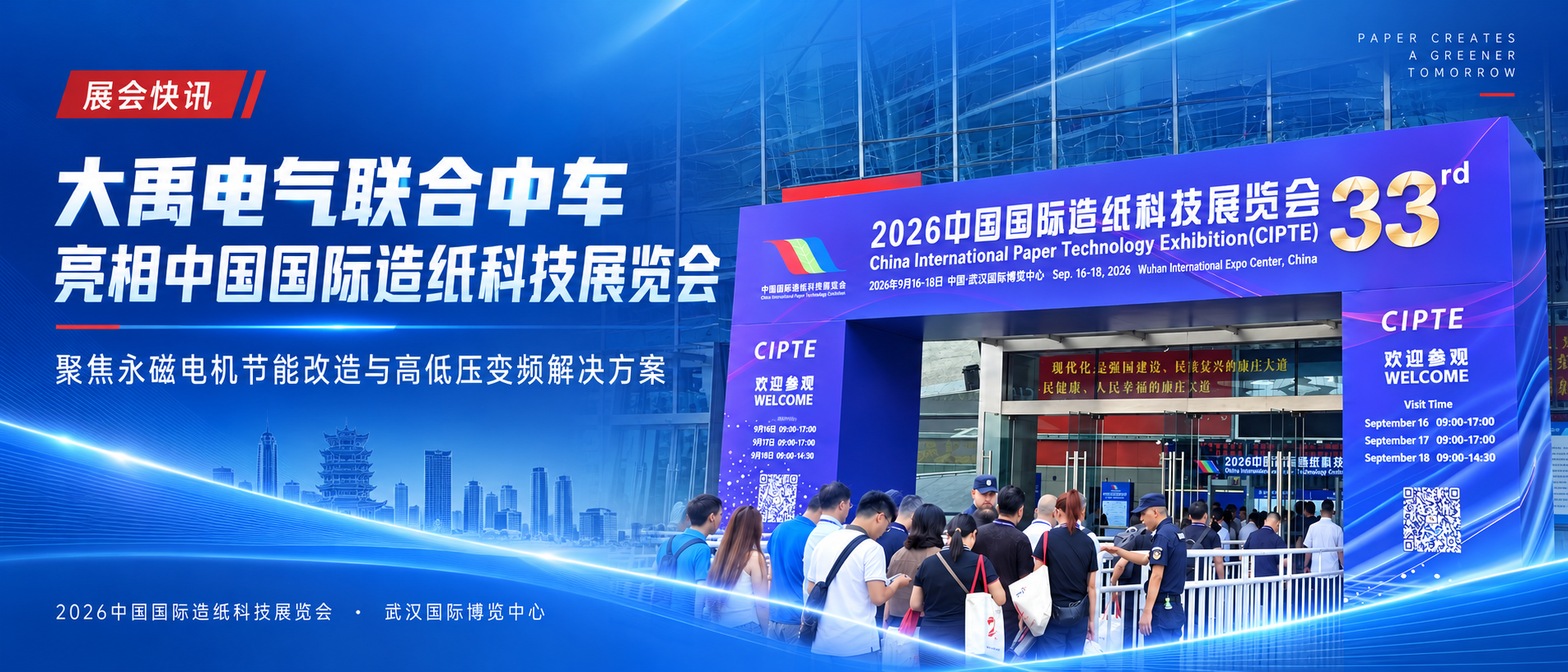
Focusing on Permanent Magnet Energy-saving Retrofit | Dayu Electric and CRRC Shangqu Debut at 2026 China International Paper Technology Exhibition
September 16–18, the 2026 China International Paper Technology Exhibition was held at Wuhan International Expo Center.
2026-09-19
-
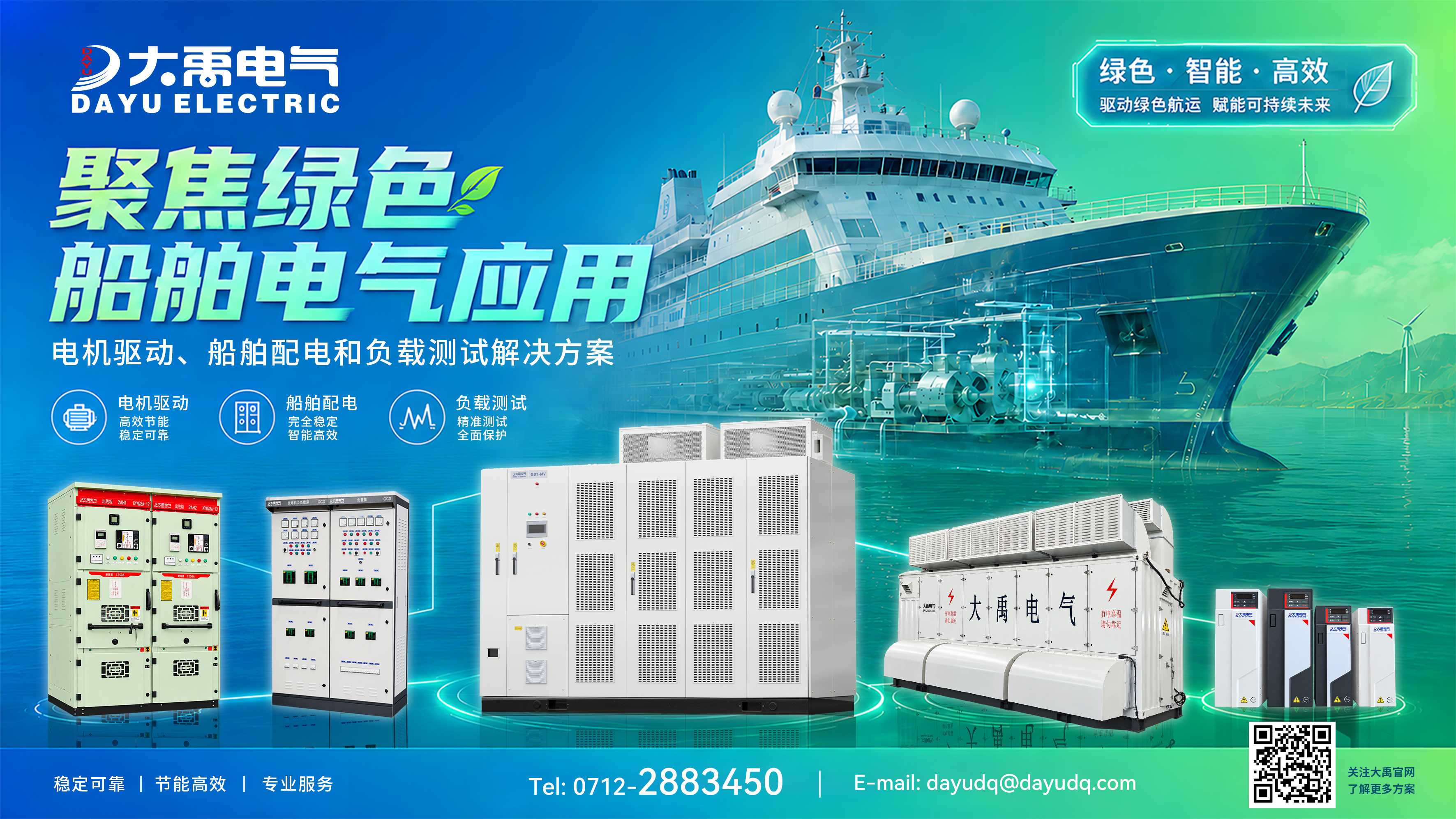
Focusing on Electrical Applications for Green Inland Vessels | Dayu Electric Exhibits at the Inland Waterway Green & Intelligent Ship New Technology and Equipment Exhibition
On September 8, the Inland Waterway Green & Intelligent Ship New Technology and Equipment Exhibition opened at Wuhan International Expo Center.
2026-09-09
FAQ

A: Start with the customer's primary requirement. If the equipment needs continuous speed control, process control, or energy-efficient operation, a high-voltage variable frequency drive (VFD) is generally the first option to consider. If the main issues are high starting current and mechanical shock, while the motor will operate steadily at line frequency after starting, a soft starter may be more appropriate. If the site has a low power factor, voltage fluctuations, rapid reactive power variations, or harmonic issues, reactive power compensation and power quality solutions should be evaluated together. Final selection should be based on the motor parameters, load characteristics, power system conditions, and process requirements.
A:High-voltage VFDs are commonly used with high-voltage motor-driven equipment such as fans, pumps, compressors, circulating pumps, blowers, induced-draft fans, dust-collection fans, and belt conveyors. They are particularly suitable for applications where the load varies with operating conditions, speed control is required, or the equipment operates continuously for long periods. Variable-frequency speed control can reduce the energy losses associated with throttling by valves or dampers while also improving starting, stopping, and overall operating stability.
A: A VFD retrofit can offer significant energy-saving potential, but the result varies by operating condition. The achievable savings mainly depend on the equipment type, changes in load ratio, annual operating hours, the existing control method, process-control requirements, and site operating practices. For quadratic-torque loads such as fans and pumps, the energy-saving potential is often more evident where substantial flow regulation is required. Before a retrofit, an on-site energy assessment is recommended so that operating data can be used to evaluate the energy-saving potential and estimated payback period.
A: Customers are advised to provide the motor nameplate data, including rated voltage, rated power, rated current, speed, power factor, and insulation class. Other useful information includes the load type, starting frequency, operating conditions, existing control method, power-supply system capacity, primary circuit configuration, site altitude, ambient temperature, dust and corrosive-gas conditions, available cabinet installation space, incoming and outgoing cable arrangement, and whether integration with a DCS or PLC is required. The more complete the information, the more accurately the solution can be matched to the application.
A: High-voltage VFD design takes into account input-side harmonics, output waveform quality, motor insulation, grounding protection, electromagnetic compatibility (EMC), and system interlocks. Dayu Electric high-voltage VFD solutions can use phase-shifted rectification, cascaded power cells, and a near-sinusoidal output waveform to reduce adverse effects on the power grid and motor. For each project, however, the complete system should still be checked against the available grid capacity, transformer configuration, cable length, motor condition, and protection system.
A: Yes. High-voltage VFDs, soft starters, and certain complete control systems can typically provide digital inputs/outputs (DI/DO), analog inputs/outputs (AI/AO), operating-status signals, fault alarms, remote start/stop commands, frequency references, and other interfaces. Depending on the project, communication options may include Modbus, Profibus-DP, DeviceNet, and CAN. The communication protocol, I/O point count, and control logic should be confirmed during the technical-agreement stage to ensure reliable integration with the customer's control system.
A: It depends on the product configuration and site operating conditions. Certain high-voltage VFDs can be configured with functions such as low-voltage ride-through, momentary power-interruption ride-through, and rotational-speed tracking with restart, helping the equipment maintain operation during short grid disturbances or recover smoothly afterward. These functions must be configured according to load inertia, process-safety requirements, protection settings, and power-supply conditions; they should not be interpreted as guaranteeing uninterrupted operation under every power-loss condition.
A: For loads such as high-power synchronous motors, large compressors, blast-furnace blowers, and gas-turbine auxiliary systems, starting current, mechanical shock, and grid voltage drop all require careful control. Depending on the power rating, motor type, and process requirements, possible solutions include a current-source high-voltage VFD, a high-voltage variable frequency soft starter, or another dedicated soft-starting solution. For very high-power motors and special loads, an application-specific design is required, with particular attention to grid capacity, the excitation system, starting torque, cooling method, and protection interlocks.
A: A conventional soft starter primarily controls the motor terminal voltage to reduce starting current and mechanical shock, making it suitable for equipment that operates at line frequency after starting. A variable-frequency soft starter coordinates frequency and voltage control so that the motor accelerates progressively from a lower frequency, providing a smoother starting process. It offers particular advantages for high-power motors, frequent-start applications, and sequential or alternating starting of multiple motors. The appropriate solution depends on the load-torque characteristics, starting frequency, grid capacity, and project budget.
A: Yes. In many soft-starting schemes, the motor is transferred to bypass operation after the starting sequence is completed, allowing it to run at line frequency and reducing long-term heat generation and operating losses in the soft starter. The bypass scheme requires appropriate contactors or circuit breakers together with the necessary electrical interlocks, protection logic, and switching sequence to prevent misoperation or switching transients. The specific bypass arrangement should be determined according to the primary system design.
A: Yes. A line-frequency bypass scheme can be designed where production continuity requires it. Common arrangements include manual bypass, contactor-based automatic bypass, and circuit-breaker bypass. After the VFD has been isolated for maintenance or because of a fault, the motor can be transferred to line-frequency operation. The bypass design should give particular consideration to electrical and mechanical interlocks, protection settings, transfer conditions, and operating authorization to ensure personnel and system safety.
A: Where a site has a low power factor, high reactive power losses, significant voltage fluctuations, or rapidly changing impact loads, the condition can be improved through reactive power compensation, capacitor compensation, dynamic compensation, or broader power quality solutions. For systems with rapidly changing loads, the compensation response speed and switching method are particularly important. For high-voltage systems, the overall design should also consider harmonics, voltage level, protection configuration, and bus operating mode.
A: A water resistor load device is suitable for high-power test applications requiring continuous adjustment and substantial heat-dissipation capacity. The load can be adjusted through the water level, electrode position, or the resistive water medium. A dry-type resistor load device uses combinations of resistor elements, offering stable response, a clear structure, and relatively convenient maintenance. It is suitable where liquid media are undesirable or a modular configuration is required. Selection should consider the voltage level, test capacity, loading method, heat-dissipation conditions, site maintenance capability, and data-acquisition requirements.
A: Before installation, confirm that the switchgear room or electrical room has suitable temperature and humidity, ventilation and heat dissipation, cleanliness, grounding, cable-entry and cable-exit routes, foundation load-bearing capacity, and maintenance clearances. For high-voltage VFDs, soft-start cabinets, and complete electrical equipment, also check cabinet transportation access, cable-trench locations, control power supply, cooling method, dust and moisture protection, corrosion protection, and fire-protection conditions. If the site environment is complex, an on-site survey should be carried out in advance and appropriate protective measures incorporated into the solution.
A: To support faster diagnosis, customers are encouraged to provide the equipment model, project name, operating conditions, time of the fault, alarm code, HMI screenshots, cabinet indicator status, primary-system operating status, DCS or PLC signal status, details of any recent maintenance or rewiring, site photos, and relevant operating records. Depending on the project, Dayu Electric can provide telephone support, remote technical guidance, on-site service, spare-parts recommendations, and maintenance training to help shorten troubleshooting time and restore stable operation.